

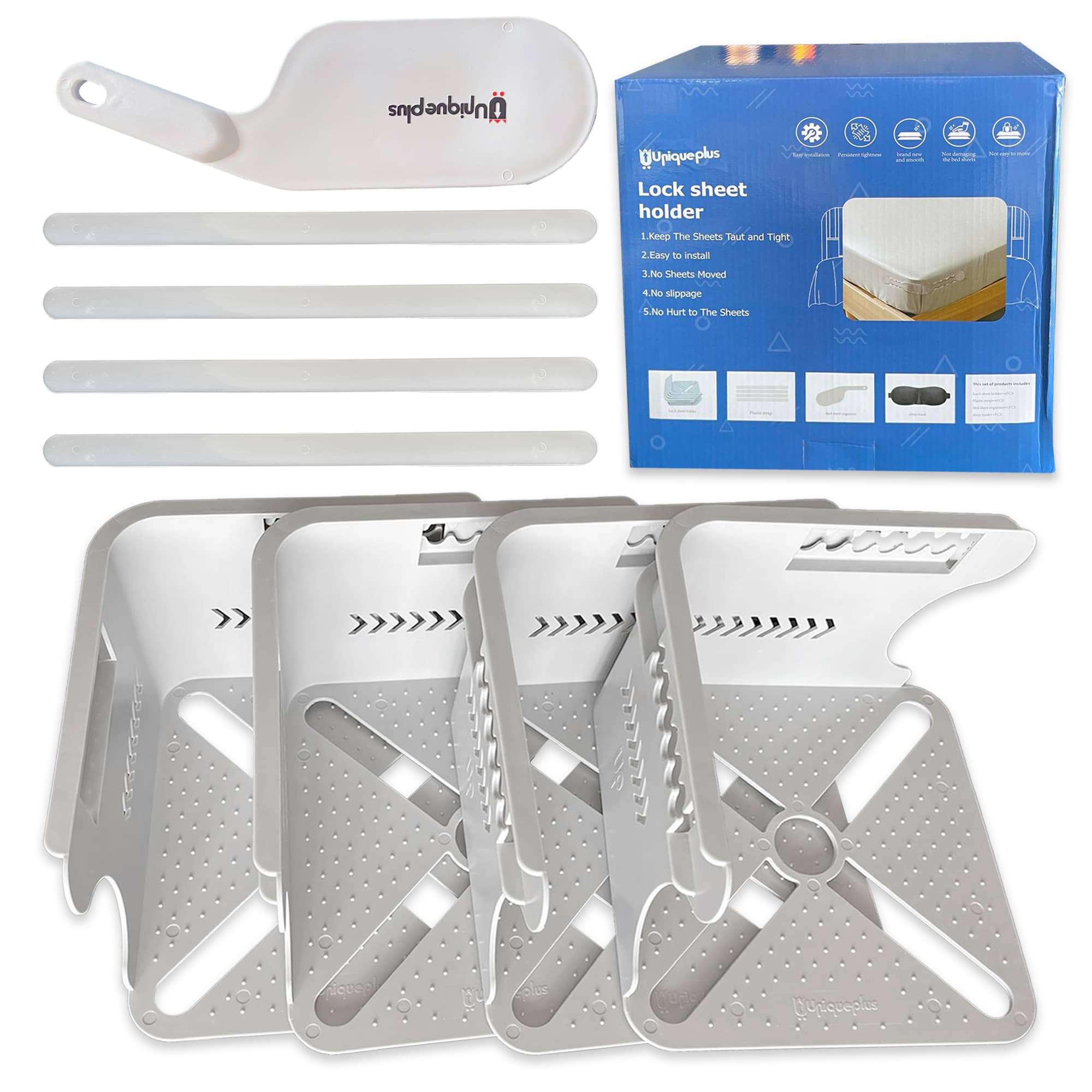

Bed sheets can become loose during the night for several reasons, including an incorrect fit, insufficient pocket depth, worn elastic, or repeated movement while sleeping. A sheet that shifts away from the mattress can create wrinkles and leave the bedding looking untidy. Choosing the right sheet size and securing the corners properly can help maintain a more consistent fit.
For people who regularly deal with loose or shifting bedding, a Lock Sheet Holder can provide an additional way to keep a fitted sheet secured around the mattress. When used with a properly sized sheet, a holder can help reduce movement and keep the corners positioned underneath the mattress during normal use.
Why Do Bed Sheets Move During Sleep?
Fitted sheets rely on their elastic edges and pocket depth to stay around the mattress. If the pockets are too shallow for the mattress, the fabric may not reach far enough underneath the sides and corners. Mattress toppers and protectors can add additional height, making a previously suitable sheet fit differently.
Movement during sleep can also gradually pull the fabric away from the corners. Sheets with worn elastic may have less tension available to hold the fabric securely, while overly smooth surfaces can make it easier for the sheet to shift.
How Does a Lock Sheet Holder Keep Bed Sheets in Place?
A sheet holder works by providing additional tension or anchoring at areas where bedding tends to move. Instead of relying only on the sheet’s built-in elastic, the holder can help keep the fabric positioned around the mattress. For additional fitted sheet tips, Sleep Foundation also discusses sheet straps as one way to help keep fitted sheets snugly positioned over a mattress topper
This can be particularly useful when the sheet itself is correctly sized but still moves during regular use. The holder should be installed according to its product instructions so that it provides a secure hold without placing unnecessary tension on the fabric.
What Causes Bed Sheets to Slip Off the Mattress?
One of the first things to check is whether the sheet’s pocket depth matches the complete mattress height. The mattress should be measured together with any topper or other layers that remain underneath the fitted sheet. A sheet that does not have enough depth may pull upward at the corners when the sleeper moves.
Elastic condition is another consideration. If a sheet previously stayed in place but has gradually become loose, stretched or weakened elastic may be contributing to the problem. In that situation, replacing the sheet may be more useful than relying entirely on an accessory to compensate for a poor fit.
How Can You Keep Bed Sheets from Slipping?
The first step is to choose a fitted sheet that matches the mattress dimensions and pocket depth. When making the bed, each corner should be pulled fully over and underneath the mattress rather than leaving the elastic sitting loosely around the corner.
Simple steps can help keep bed sheets from slipping, starting with the right sheet depth and a proper fit around the mattress. Checking the sheet after washing, avoiding excessive stretching during installation, and accounting for mattress toppers or protectors can also help reduce unnecessary movement. If the sheet still shifts during use, an additional holder may provide extra support.
Can a Lock Sheet Holder Help with Deep Mattresses?
Deep mattresses can make sheet fitting more challenging because the sheet needs enough fabric to extend down the sides and underneath the mattress. A mattress topper can increase the total height even further, so measuring the complete bedding setup is important before selecting a sheet.
A holder can provide additional support when a correctly sized sheet still moves during use. However, it should not be considered a replacement for selecting a sheet with an appropriate pocket depth. The basic fit needs to be suitable before an accessory can provide effective additional support.
How Can You Prevent Sheets from Sliding on Different Mattresses?
Different mattress constructions can affect how bedding sits and moves. Memory foam mattresses, pillow-top designs, mattress toppers, and protective layers can all change the overall height or surface characteristics of a bed.
To Prevent Sheets from Sliding, start by checking the mattress and sheet measurements, then make sure every corner is properly seated. If the sheet continues to move despite having the correct fit, a suitable holder or sheet strap may provide additional anchoring.
What Should You Consider When Choosing a Lock Sheet Holder?
Before choosing a sheet holder, consider the type of mattress and sheets you use. The holder should be compatible with the sheet construction and should provide enough support without pulling excessively on the fabric.
It is also worth considering how easy the holder is to install and remove. A practical design should allow the bedding to be secured without making routine bed changes unnecessarily difficult. The material and construction of the holder can also matter if it will be used regularly.
How Can You Keep Your Bed Sheets Secure for Longer?
Proper washing and drying can help maintain the condition of bedding over time. Always follow the care instructions for the specific sheet material, particularly when dealing with elastic components. Excessive heat and repeated stretching can affect some elastic materials.
It is also useful to check the corners and seams periodically. If the elastic has lost its ability to hold the sheet firmly, or if the fabric has become damaged, replacing the sheet may provide a better long-term solution than repeatedly trying to tighten it.
When Should You Use a Sheet Holder?
A sheet holder can be worth considering when the sheet is correctly sized and fitted but continues to move during normal use. It may be especially useful for beds where frequent movement, mattress toppers, or particular bedding materials make it harder for the sheet to remain in position.
Before adding a holder, check the basics first: mattress dimensions, pocket depth, sheet condition, and corner placement. Solving an underlying fit problem can often make a greater difference than adding an accessory alone.
Final Thoughts
Keeping bed sheets in place starts with choosing the correct size and pocket depth for the mattress. Properly fitting each corner, maintaining the sheet’s elastic, and accounting for mattress toppers or protectors can all help reduce unwanted movement.
When a well-fitting sheet still shifts during sleep, a Lock Sheet Holder can provide an additional way to anchor the bedding. For people looking for practical bedding accessories, Unique Plus USA can provide options designed to support everyday home needs.
FAQs
Why do my bed sheets keep slipping off the mattress?
Common causes include an incorrect pocket depth, worn elastic, an improperly fitted corner, or additional mattress layers that make the bed taller than expected.
Can a sheet holder stop fitted sheets from moving?
Should I use a sheet holder on a deep mattress?
It can be useful if the sheet is correctly sized for the mattress but still moves. The sheet’s pocket depth should be checked first.
Can a mattress topper cause sheets to slip?
Yes. A topper increases the total height the fitted sheet needs to cover, which can make a previously suitable sheet too shallow.
When should I replace a fitted sheet instead of using a holder?
If the sheet has worn-out elastic, damaged seams, or an incorrect pocket depth, replacing it with a properly sized sheet may be more appropriate than relying on a holder to compensate for the problem.